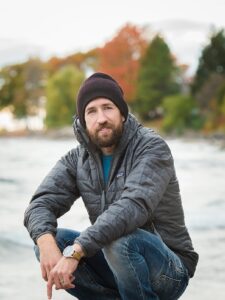
Submitted by Lucas Tingle, Regenerative Farmer Lucas manages the Oak Street Community Farm for the Local Community Food Centre. The farm is generously provided by the City of Stratford. Lucas is also the Professor of Environmental Stewardship of soil and water at Fanshawe College. His courses emphasize ecological approaches to agriculture. Lucas holds a degree in English Literature from Queen’s University.
Globally agriculture uses 40% of the earth’s land mass. Approximately 4.8 billion hectares of the earth’s surface is being farmed currently. Estimates fluctuate, but generally it is agreed that it takes 1 acre of land to nourish each person on the planet. Currently there are 8 billion people who need to eat today; 41 million of those in Canada alone.
Agriculture is not a closed loop. The answer isn’t as simple as creating more farm land so that we can support a growing population. Other elements need to be considered: fertility, machinery, clean water, reliable energy, and a stable climate are a few factors that extend beyond just requiring land to support agriculture and our plates. .
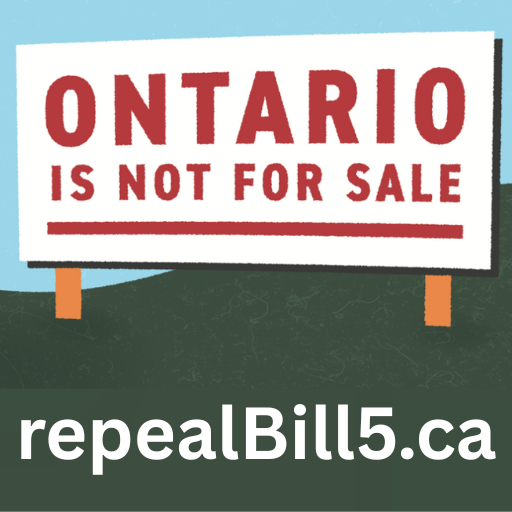
We are at a crossroads here in Ontario. Bill 5 has recently been enacted into law and threatens to accelerate a growing issue that will affect us all. The march of development on farmland to deal with economic strain is a mistake.
The OFA (Ontario Federation of Agriculture) has expressed concern that Bill 5 will erode efforts in the future for sustainable farming. They warn that short term “gain” of land for development could lead to significant long term damage. The OFA has reported that Ontario is currently losing 319 acres of farmland per day. Allowing Special Economic Zones (SEZs) where development can proceed without “guardrails” of any kind could significantly amplify the loss of farmland and valuable topsoil we rely on as a country and as a province for the maintenance of our food sovereignty. To enable the Cabinet to determine which laws should apply in SEZs attempts to bypass careful and expert development of the legal structure and protections of our province.
While Southwestern Ontario is an agriculturally rich part of the world, farmland only represents .5% of the province of Ontario’s land mass. The topsoil that was deposited here 10,000 years ago and built up over millennia of forest growth and decay has been stewarded expertly by our dairy, beef, pork, cash crop, and vegetable farmers throughout the last century. Our farmers are the people that have helped keep Ontario’s food sovereignty intact through their dedication to the land they steward.
Putting our farmland on the line by allowing for unregulated development of land is a risk unbecoming of a community that has guarded these precious resources for so long. Bill 5 is a misstep with devastating implications for Ontario. Agriculture for the next generation could be about building a healthier environment through conservation tillage, careful fertility management, agroforestry, and building pollinator habitat.
As a farming community, the people of Perth County stand in a position to uphold and protect the legacy that our grandparents and great grandparents have been writing in the soils of this land for generations. Bill 5 and Special Economic Zones take neither stock of our legacy or the health of our food system and food sovereignty when paving over our most precious resource: topsoil.
Bill 5 isn’t about creating more efficient economic progress to help Ontarians combat the inflation rates that are affecting everyone. Bill 5 is about eroding the need to consult experts and governing bodies that are in place to protect the long term interests of Ontarians. Allowing for SEZs will have negative long lasting impacts on the future health of Ontario and our province’s natural resources.
As farmers we have a long term vested interest in our acreage. In fact, we are experts when it comes to the land we steward. We are guardians of land and water. We always have been. Let’s continue the rich tradition that our community was built on. Our first step at this point in time is to protect the natural resources we have from irresponsible development. Short term narrow-sighted economic ends are threatening to cause irreparable damage to our most valuable resource: our farmland and our soils.